
Introduction
The mechanical hard drive has been around for nearly 70 years and still
rules mass storage inside the world’s data centers. But Samsung is working
on something aimed squarely at retiring it: a new generation of SSDs of up
to 1 petabyte per unit, designed to replace hard drives in servers, the
cloud, and AI infrastructure. Here’s what they are, when they might arrive,
and what they mean for you.
What Samsung’s “nearline” SSDs are
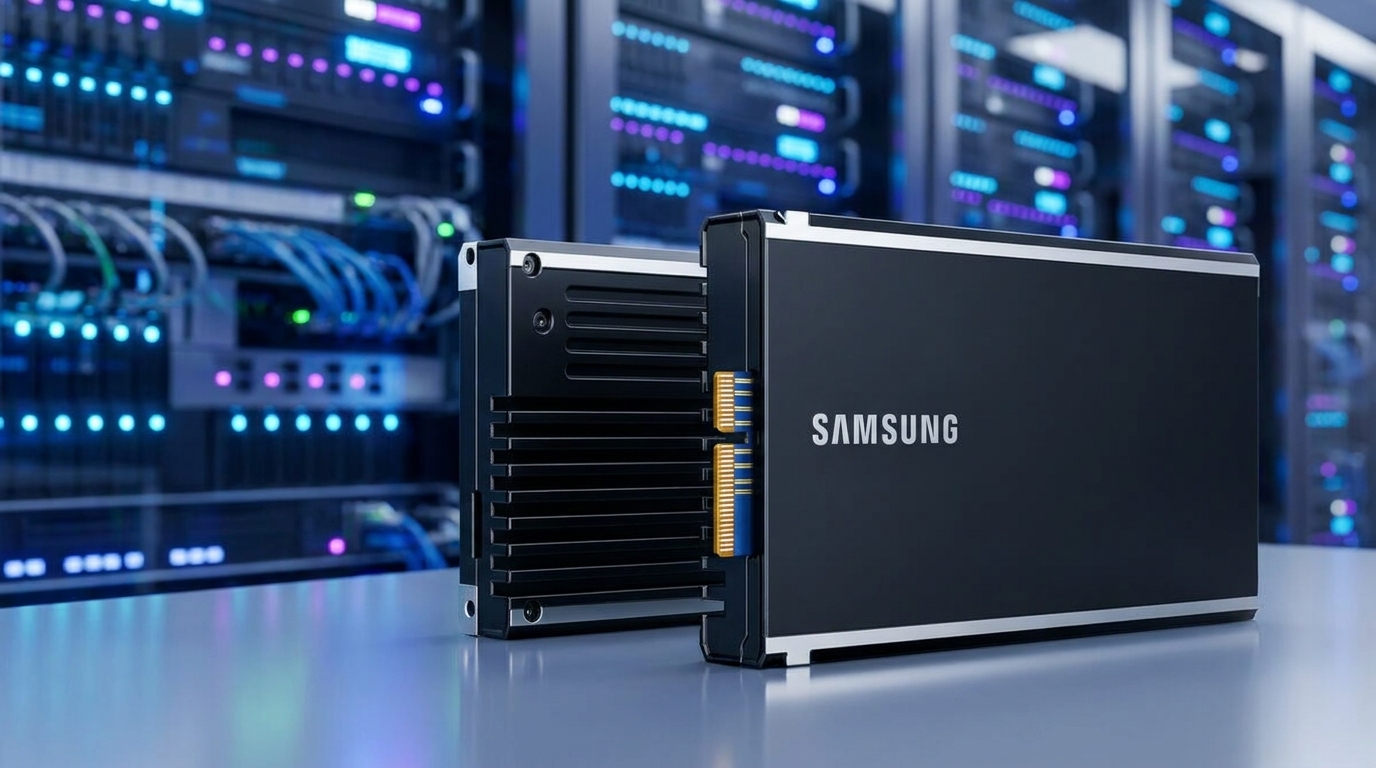
These are high-capacity solid-state drives —from 250 TB up to 1 PB— in the
“nearline” category: storage built for data that’s accessed infrequently,
written once and rarely touched again. The density is staggering: around
50 PB in a single tray and close to half an exabyte per rack, a fraction of
the space and power that mechanical hard drives would need for the same
capacity. The news surfaced through Scality, a storage solutions company
that holds a co-development agreement with Samsung’s memory research center.
The trade-off
It’s not all about speed. These SSDs are slower than a consumer NVMe and
have lower write endurance —around 0.1 drive writes per day versus 0.5 for
today’s data-center SSDs. That’s not a flaw: they’re designed to store data
once and keep it for years, not to rewrite it constantly. Which is exactly
why they aren’t meant for a desktop PC or for gaming.
What exists today and when this arrives
While this development matures —targeting a possible 2027— Samsung already
ships high-performance consumer drives like the 9100 PRO, a PCIe 5.0 NVMe
with speeds up to 14,800 MB/s and models up to 8 TB. In parallel, the race
for memory density keeps accelerating: Samsung has shown a 900-layer
prototype, SK Hynix already sells 321-layer chips in volume, and rivals
like Solidigm are working on similar high-capacity SSDs.
Conclusion
The hard drive won’t vanish overnight, but the direction is set: the mass
storage of the future is solid-state. For the home user the impact will be
indirect and medium-term —especially if the data-center transition helps
ease the pressure on storage prices.