
Picture this: you’ve got a classic muscle car chassis, beautifully restored, but instead of its original engine, someone’s dropped in a brand-new, hyper-efficient jet turbine. That’s kind of the vibe I’m getting from QNAP’s latest AI NAS. They’ve just unveiled a new system that pairs a six-year-old, 16-core AMD EPYC “Zen 2” CPU with the option of NVIDIA’s seriously powerful 96GB RTX PRO 6000 Blackwell GPU. It’s an unusual combination, to say the least, but it reveals a fascinating insight into the evolving world of edge AI.
For most PC enthusiasts, seeing “Zen 2” alongside “Blackwell” might feel like a temporal paradox. Zen 2 is solid, reliable, a workhorse CPU architecture from a few generations back. Blackwell, on the other hand, is NVIDIA’s absolute latest, designed from the ground up for massive AI workloads and professional graphics. So why the seemingly mismatched duo? It boils down to specialized roles in an edge AI environment.
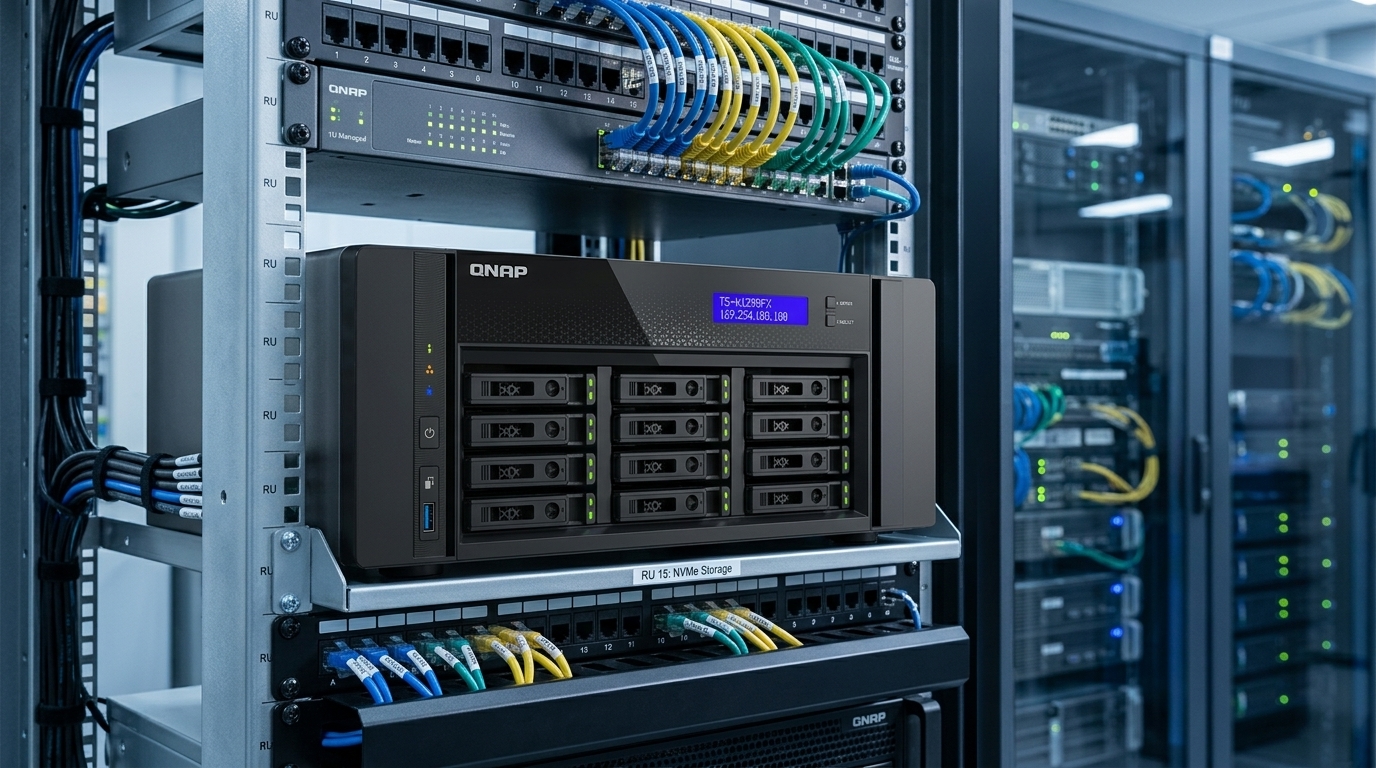
Think of it like this: the EPYC processor isn’t there to crunch the deepest neural networks. Its job is more akin to a highly capable data traffic controller and orchestrator. It manages the storage, handles network I/O, runs the operating system, and coordinates tasks. For these functions, its abundant PCIe lanes, substantial core count, and proven stability are more than sufficient. It doesn’t need to be the absolute bleeding edge for every single computational task; it just needs to reliably feed data to the real heavy lifter.
The RTX PRO 6000 Blackwell, though, that’s where the magic happens for AI. With its whopping 96GB of VRAM and Blackwell’s architectural advancements, this GPU is engineered for complex AI inference and model training right at the edge. Whether it’s processing real-time video analytics, running local large language models, or powering industrial automation, this card brings unparalleled raw compute power directly to where the data is generated. It’s a formidable piece of silicon — and you bet I mean monstrous.
The Odd Couple’s Core Specs
- CPU: AMD EPYC “Zen 2” (16-core)
- GPU (Optional): NVIDIA RTX PRO 6000 Blackwell
- Blackwell VRAM: Up to 96GB
- Primary Application: Edge AI NAS and accelerated computing
This pairing isn’t about building a general-purpose supercomputer. It’s a very deliberate design choice for efficiency and performance in specific AI applications. By leveraging a mature, cost-effective, and highly available CPU platform, QNAP can allocate more of the system’s budget and thermal envelope to the component that truly dictates AI performance: the GPU. It’s a pragmatic approach that makes a lot of sense when you’re deploying AI at scale, where every dollar and watt counts.
For me, this strategy highlights an interesting trend. Not every component needs to be brand-new to deliver top-tier performance in a specialized system. The goal isn’t always the fastest CPU benchmark; sometimes, it’s about the most efficient AI inference per dollar. I think QNAP is tapping into that sweet spot, offering incredible AI acceleration without the unnecessary overhead of a latest-gen server CPU for tasks where it simply isn’t the bottleneck.
We’re going to see more of these specialized, hybrid systems as AI continues to permeate every corner of technology. Manufacturers will get creative, finding optimal component combinations that maximize performance for a particular workload while keeping costs in check. The future of computing, especially at the edge, isn’t just about raw speed; it’s about smart, targeted integration. It certainly makes for some intriguing hardware developments.
Via wccftech.com.
Fuente: wccftech.com